




Description
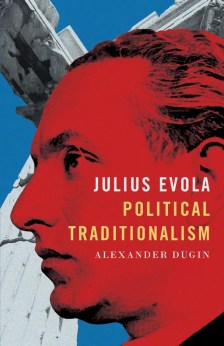
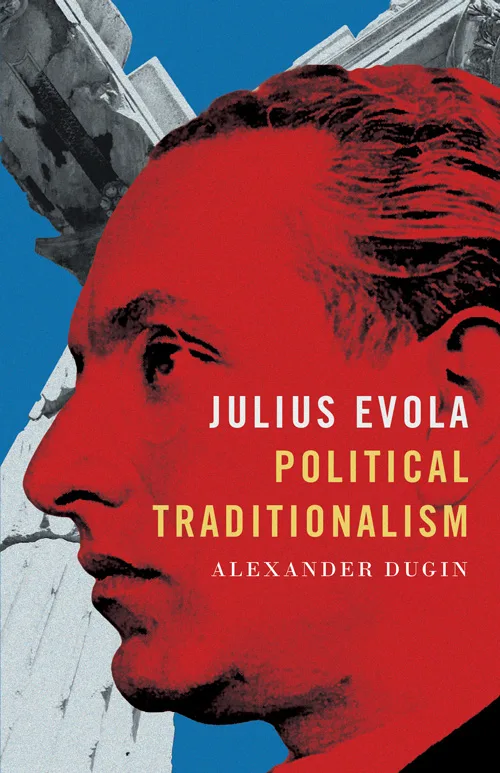
In this landmark volume, Alexander Dugin presents a far-ranging panorama of the life, works, and contested legacy of the Italian Traditionalist Julius Evola. The fruit of nearly half a century of engagement with Evola’s works, Dugin’s essays weave together philosophical, esoteric, and biographical perspectives to illuminate key dimensions of the Evolian project.
From Evola’s early Dadaist experiments and philosophical writings to his explorations of Tantra, alchemy, and the Holy Grail; from his engagements with the Conservative Revolution and Fascism to his reflections on the “differentiated man” and “riding the tiger” — Dugin re-reads Evola as a phenomenologist of initiation and as a revolutionary forerunner of Traditionalist politics. Situating Evola’s relevance within Russian Traditionalism, the Fourth Political Theory, and the crisis of Postmodernity, Dugin argues that Evola is by no means a figure of the past, but a vital force in the present.
Julius Evola: Political Traditionalism is essential reading as an introduction to Evola’s oeuvre, a unique showcase of Dugin’s thought, and a summons to reawaken Traditionalist thinking and action today.


Manuel de Cossio –
Excelent book by a great author!!!!!
Anonymous (verified owner) –
This book was worth every penny. Arktos continues to deliver high quality material on the niche topics I enjoy.
michael sellers –
Love your books
Adonis Imperator (verified owner) –
A very good introduction to Evola, or a way to find out more of his philosophy, distilled. Dugin includes his concept of the Fourth Political Perspective, which is interesting. I though it was a great book.
Dugin does, however, reveal himself as a professional philosopher when he bizarrely calls the intellectual trolloop Foucault an example of the, “differentiated man,” which Evola has advocated. Same with Sartre. That he, and a few select other controversial and particulalry awful philosophers would have entered the text is indredibly strange. The only explanation is that Dugin, like all professional philosophers, needs a little controversy to hook the reader. No thanks.
Also a minor point was when he called Rajneesh’s (Osho) neo-tantra a fraud, and opts for the dry, initiatic only, philosophical trantrism. Essentially revealing that he never listened to the hundreds of hours of Osho’s 1970’s talks about Tantra, or he would have known that Rajneesh talked about the intiatic process, but went further to explain the visceral tantric processes. It’s clear that Dugin only watched documentaries or read news articles about Rajneesh instead of looking for himself.
Thus 4 stars instead of 5.